Since ancient times, man has strived to provide himself and his loved ones with a worthy final resting place. It had to be as durable and safe from destruction as possible. As an exceptionally resistant material, natural stone has proven to be an ideal material for meeting these requirements and has traditionally been accepted as almost the only material used for arranging graves.

The arrangement of graves and the design of tombstones are influenced by a significant number of factors, such as:

  • conditions prescribed by cemetery administrations (dimensions, method of access to the burial pit, landscaping and construction of paths around the grave device, and sometimes the selection of stone and method of processing)
  • the existing conditions on the grave plot itself and on the surrounding grave plots
  • technical limitations of the materials being installed and the technical capabilities of the craftsmen who process the stone
  • the wishes and preferences of the owner of the grave site who orders the arrangement of the grave
  • At Kamen Tunić, we take all of the above factors into account when designing your family's eternal resting place.

Types of grave services

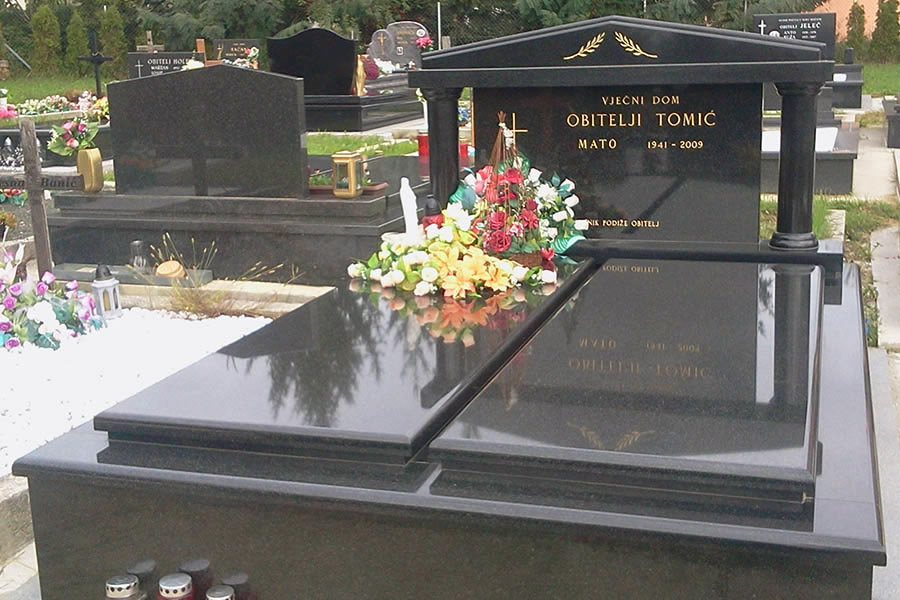
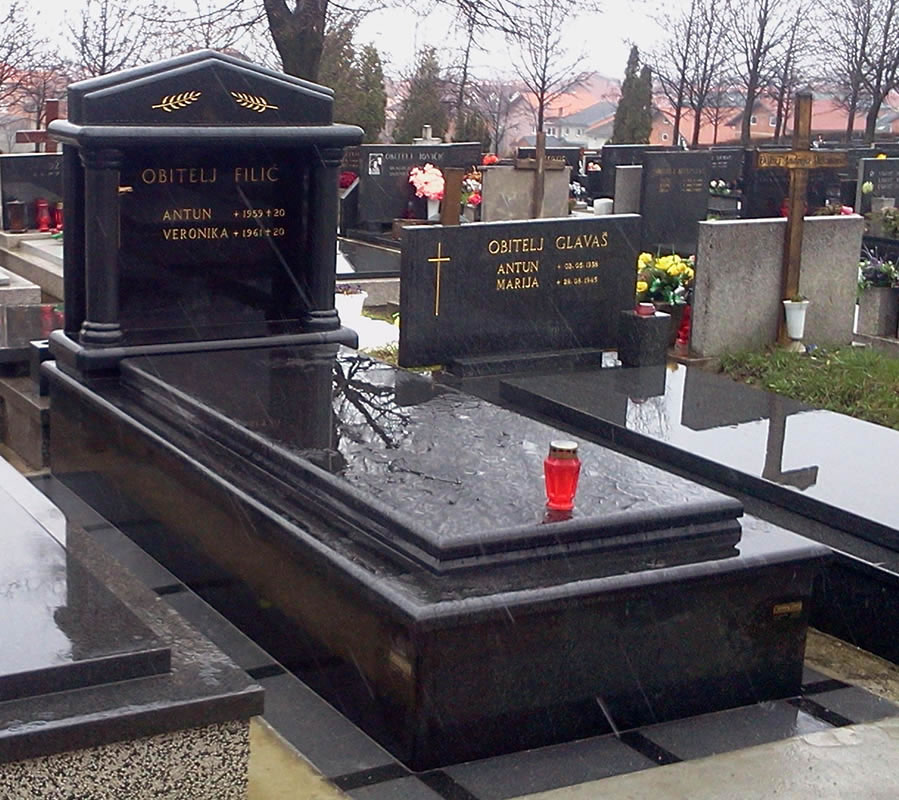
Tombs

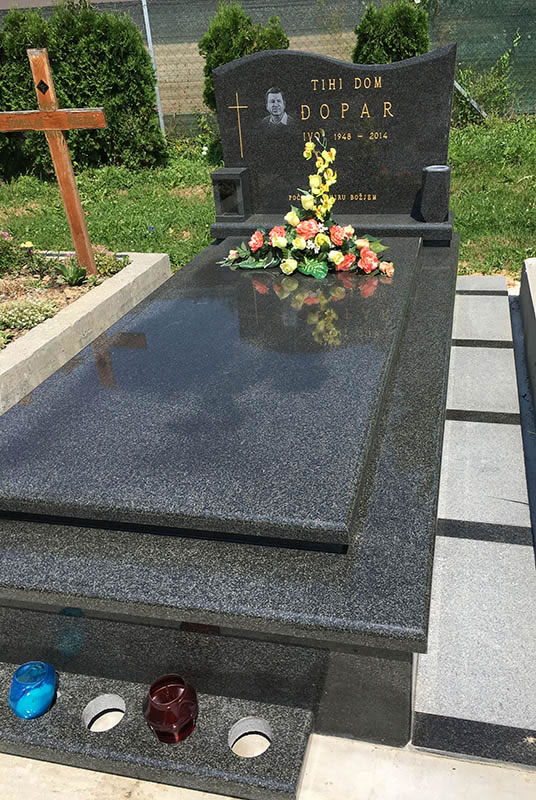
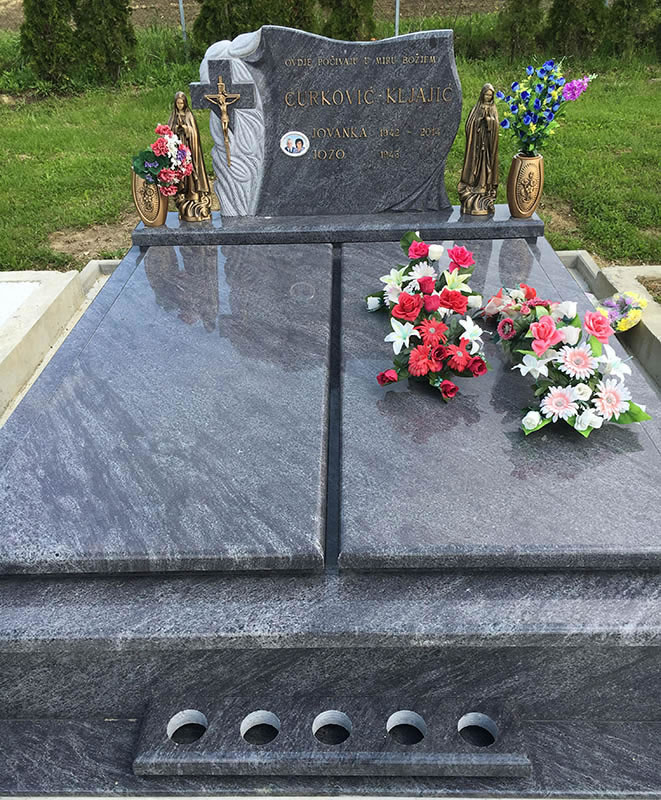
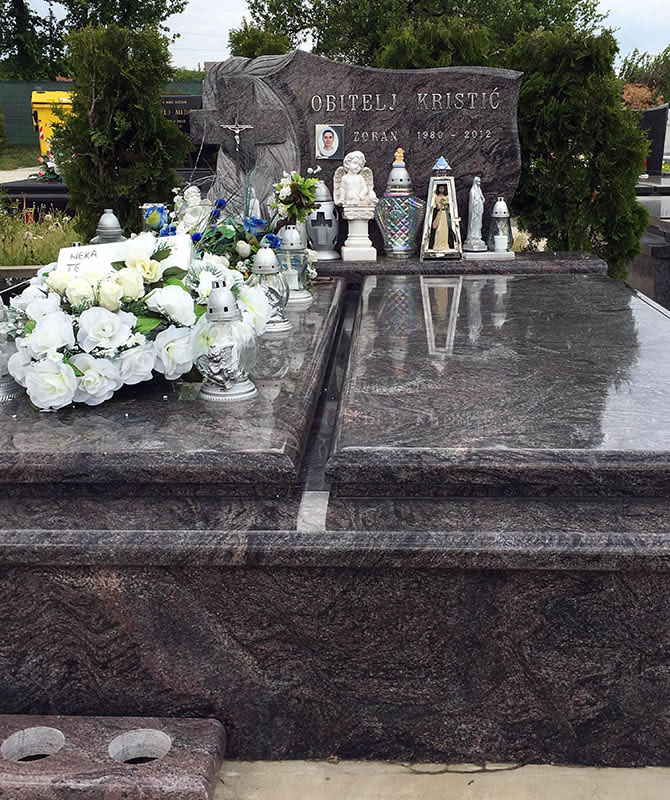
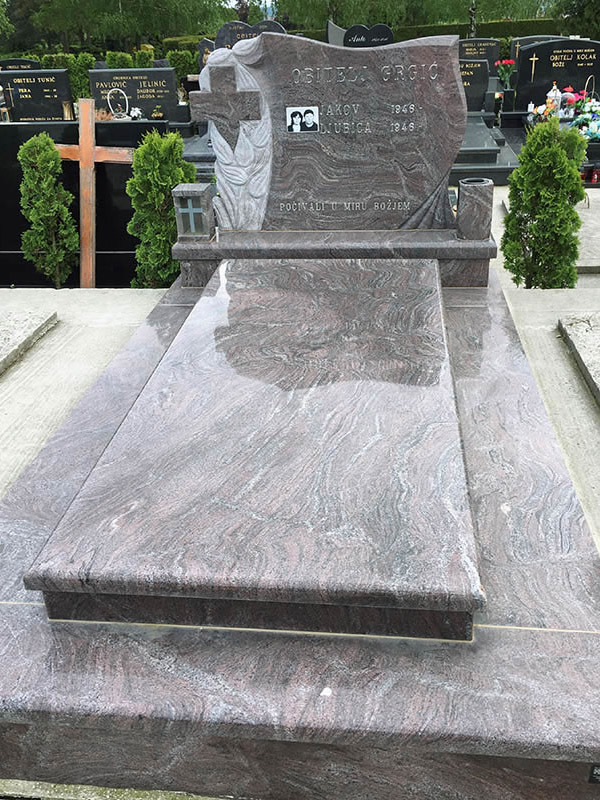
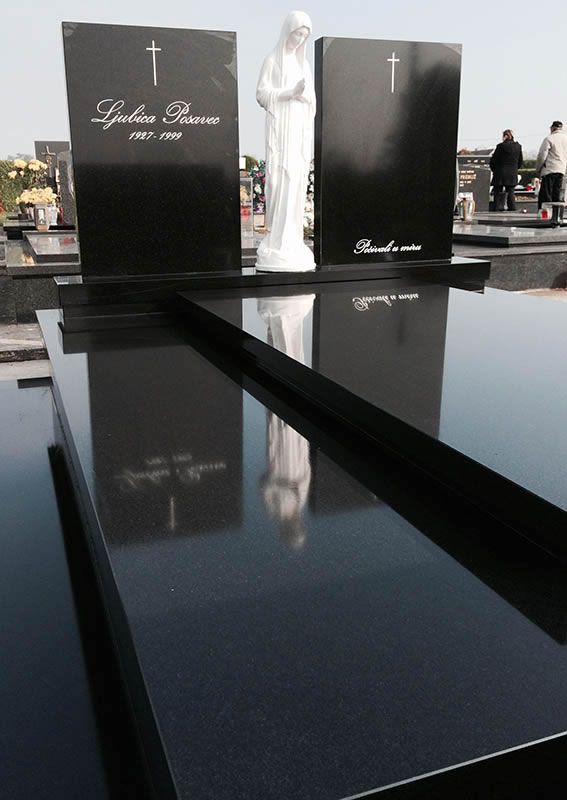
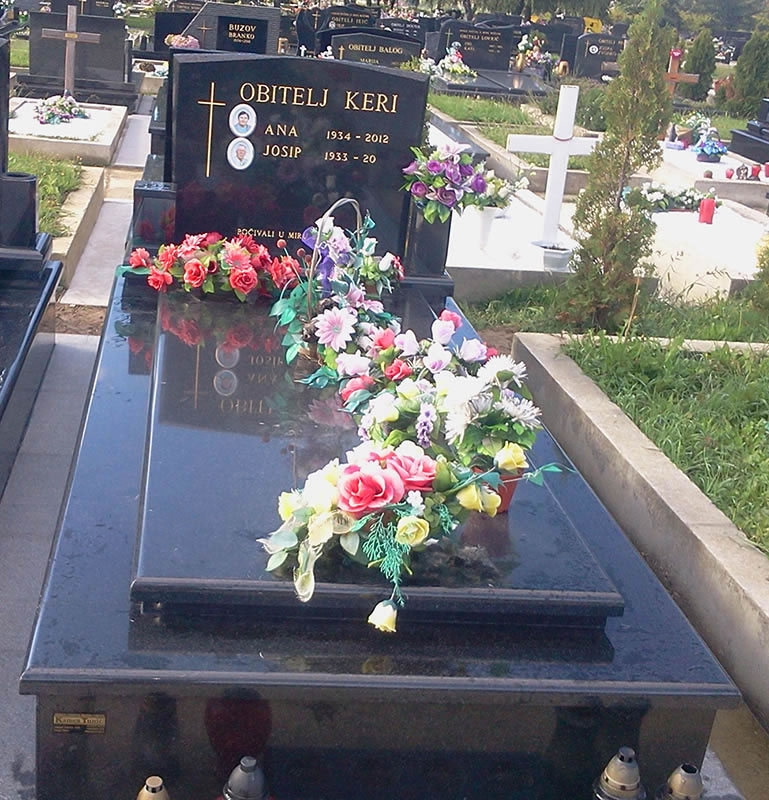
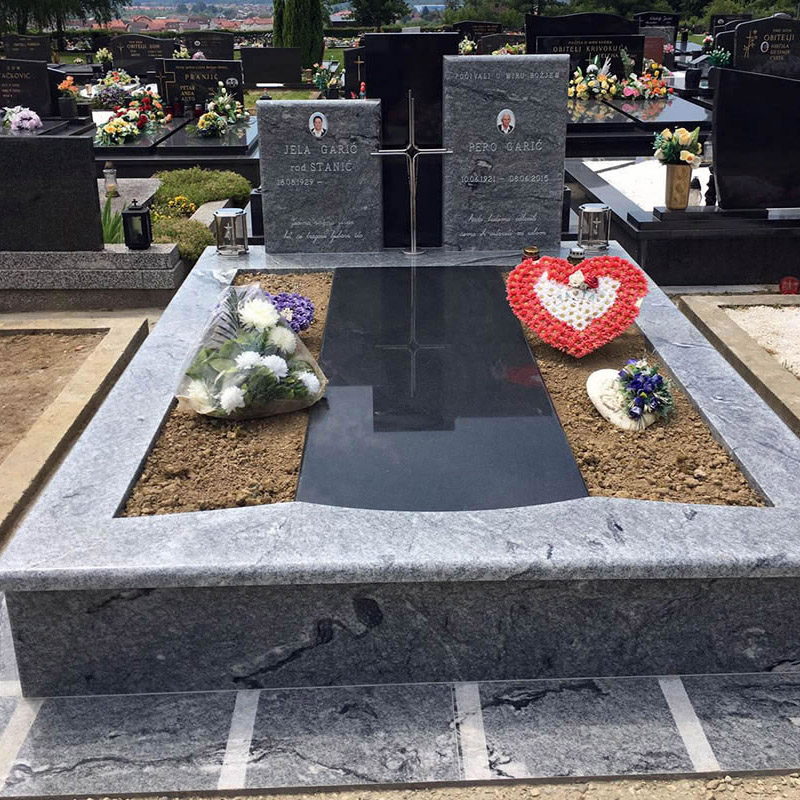
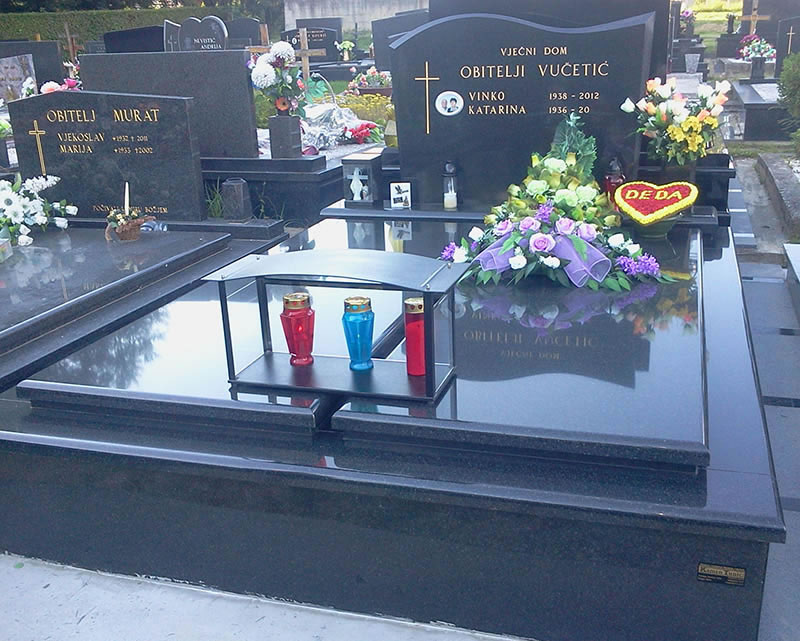
Tombs are burial structures in which the burial is carried out by placing the coffin in an underground chamber – a tomb. The above-ground arrangement of tombs is similar to the arrangement of earthen graves, and in some, although rarer, cases it is even impossible to distinguish a tomb from an earthen grave based solely on the above-ground arrangement. The underground chamber of the tomb is nowadays generally built of reinforced concrete, and the above-ground part of the tomb is lined with natural stone elements.

Earthen graves

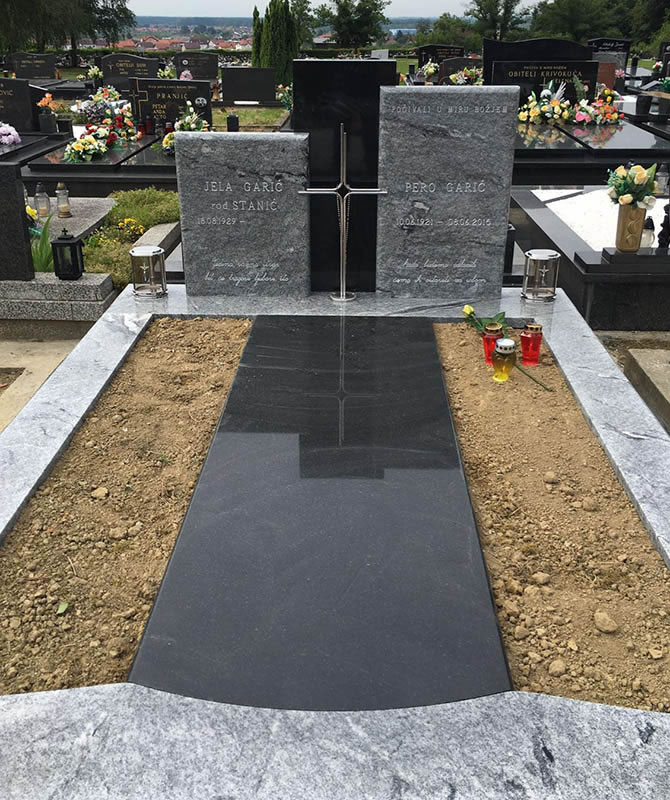
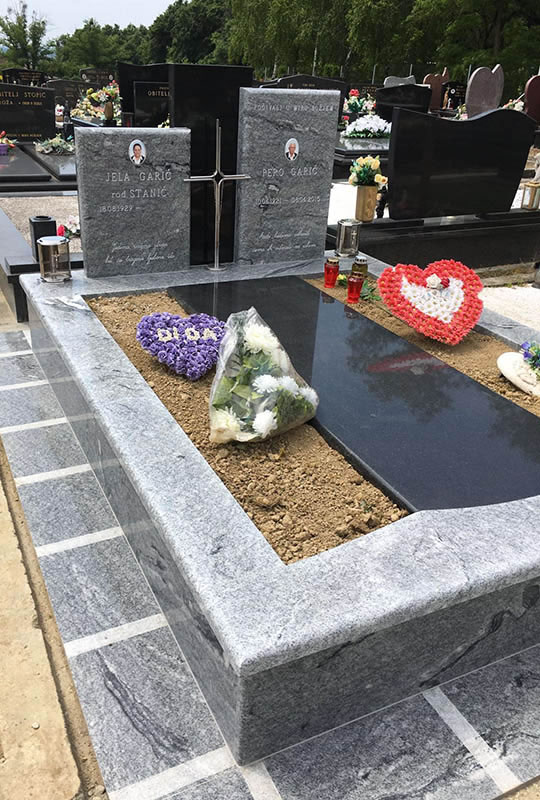
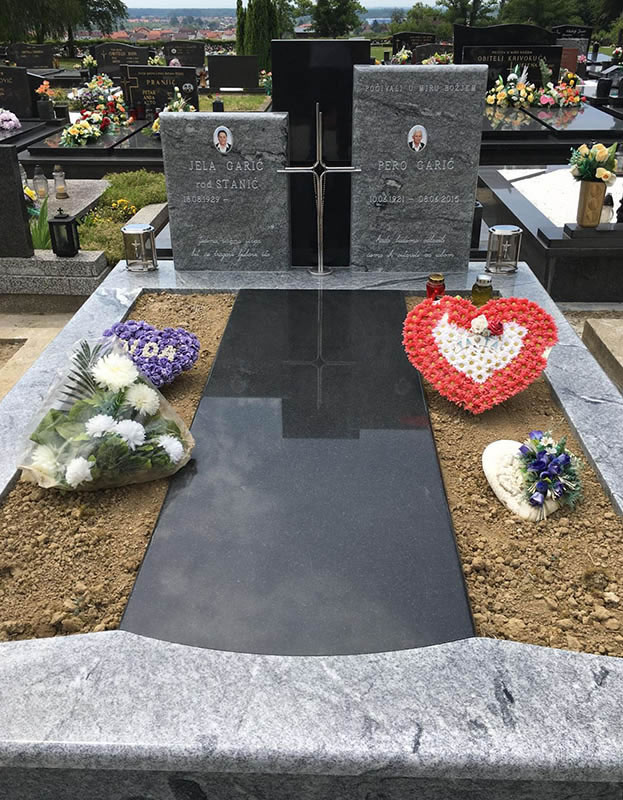
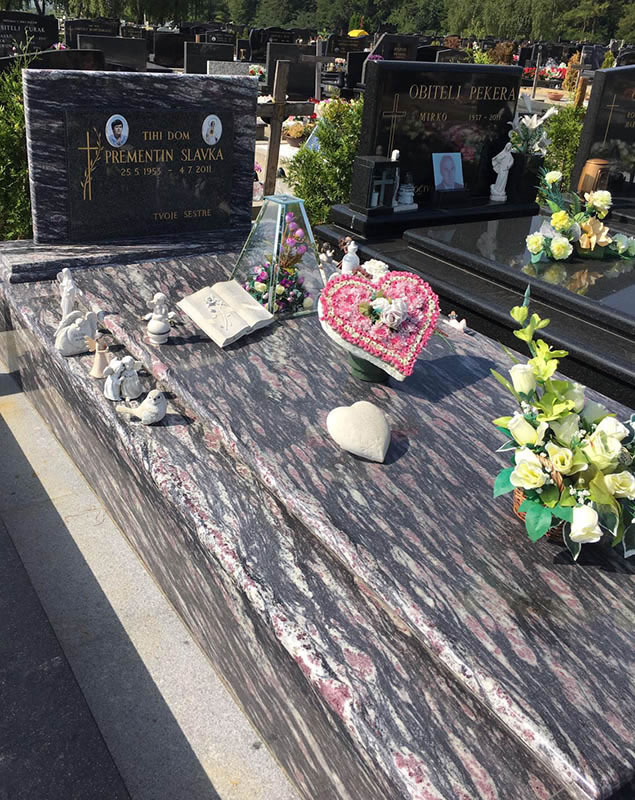
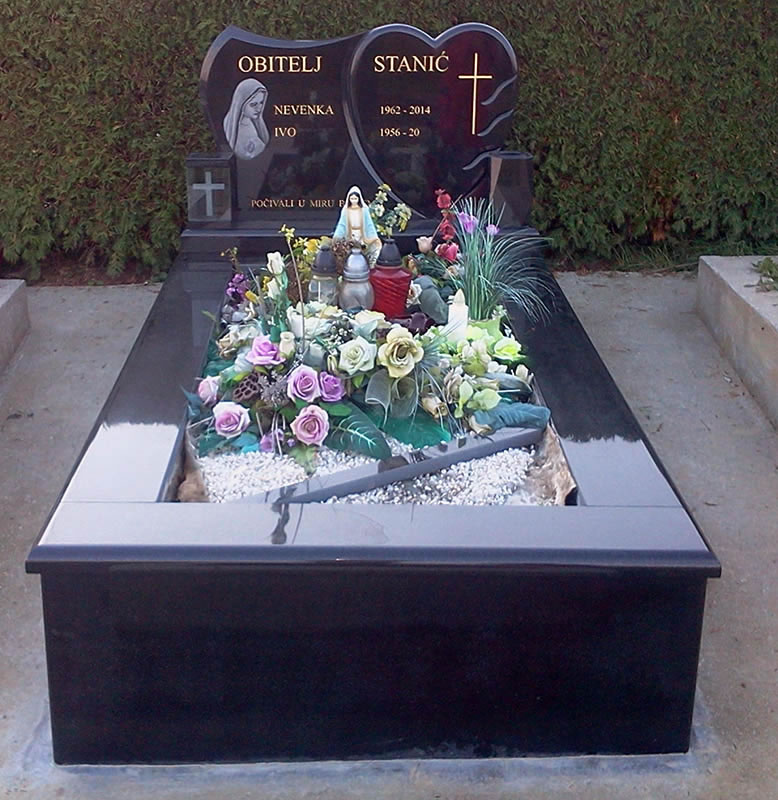
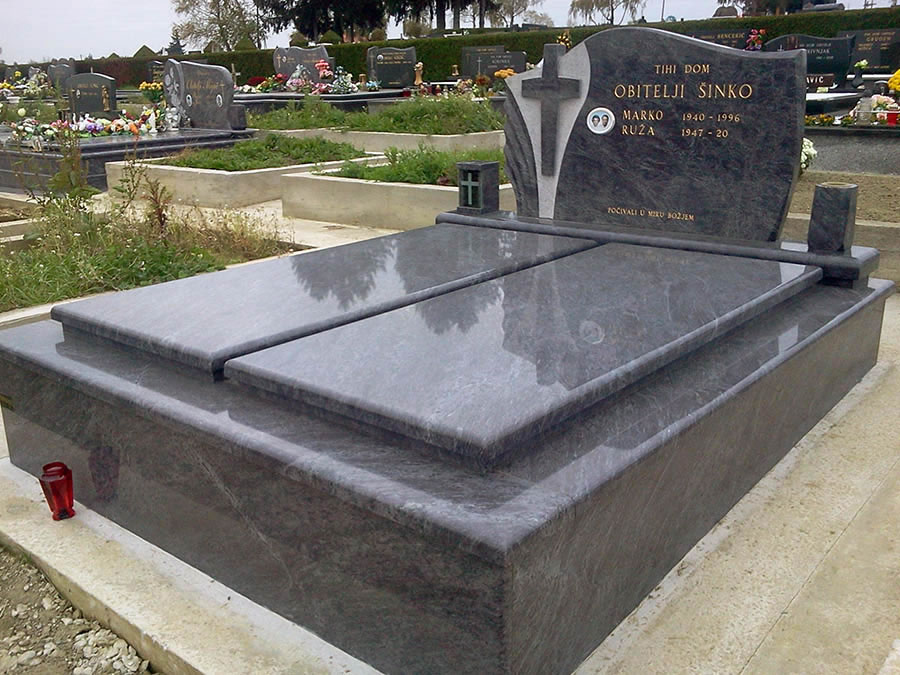
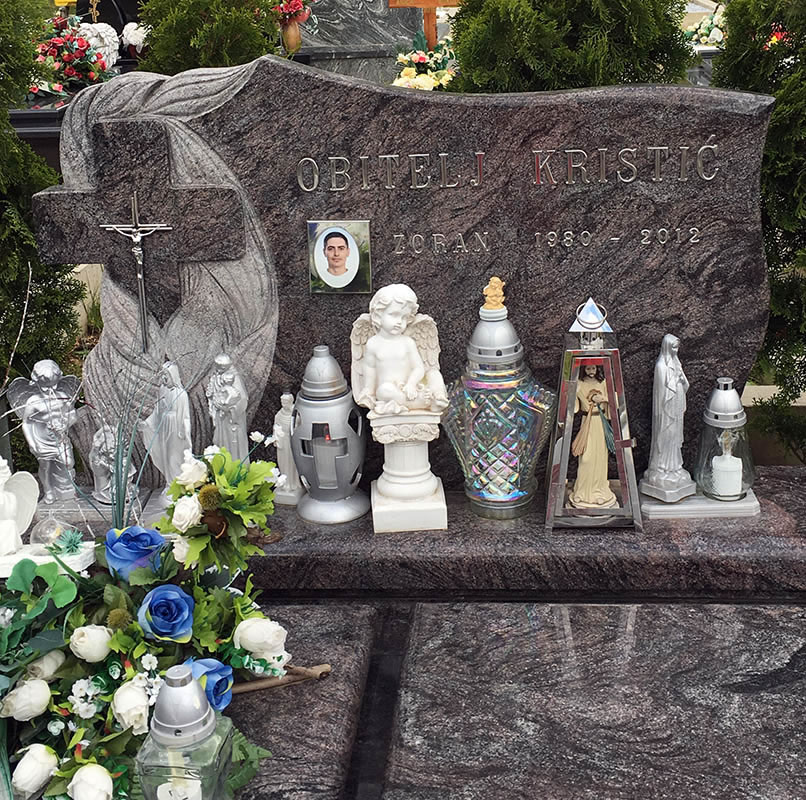
Earthen graves are graves where the burial is done by burying the coffin in the ground, while the above-ground part is most often decorated with a combination of natural stone and concrete. Depending on the number of burial places covered by the earthen grave, we distinguish between single and double graves.

Green graves

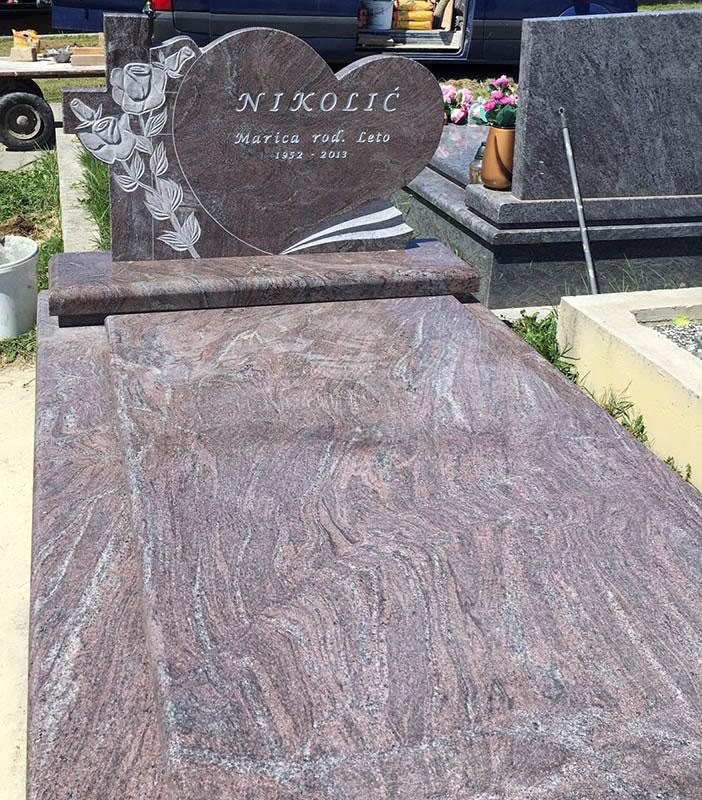
A green grave is an earthen grave without a grave frame, while a tombstone is placed on a previously concreted foundation strip.

Example of a typical burial device

Nameplate

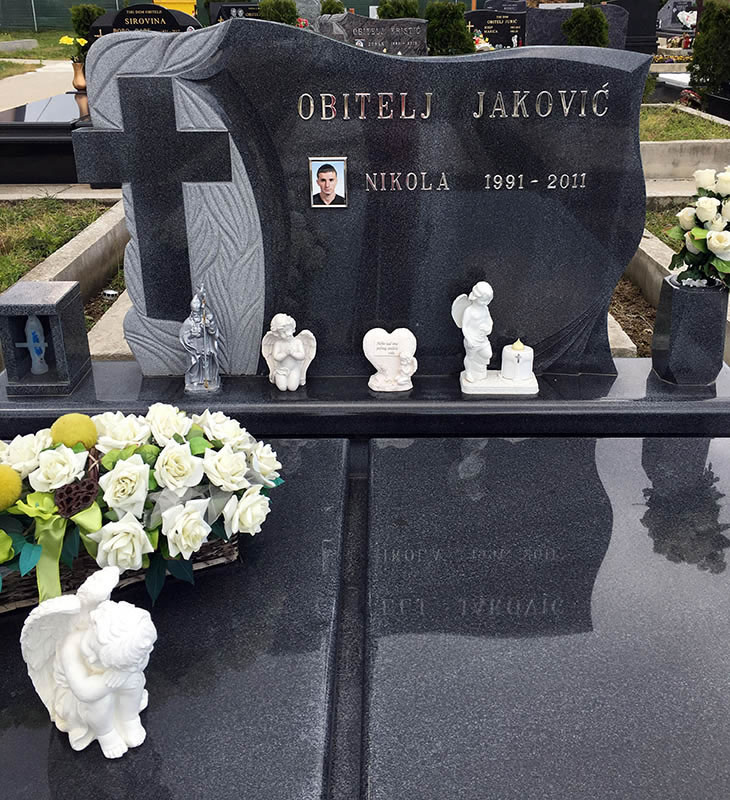
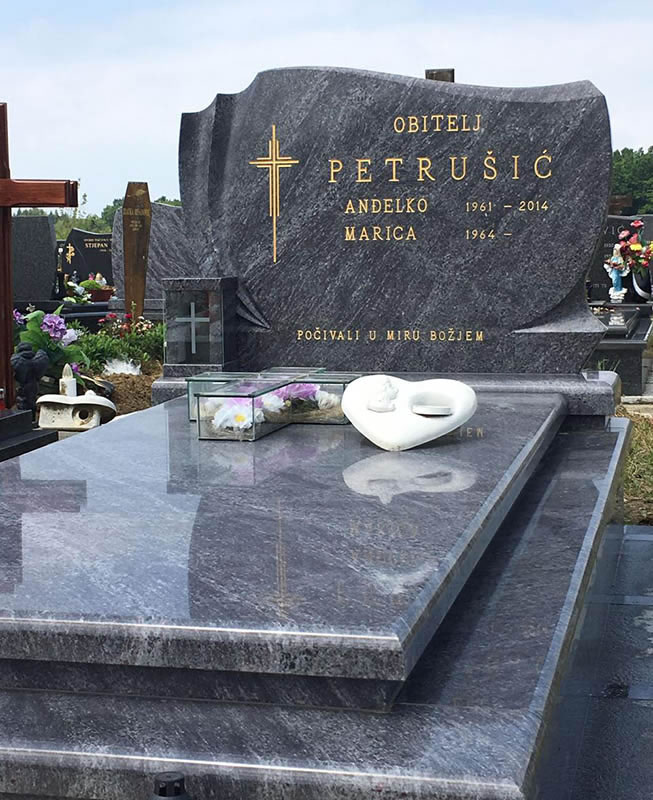
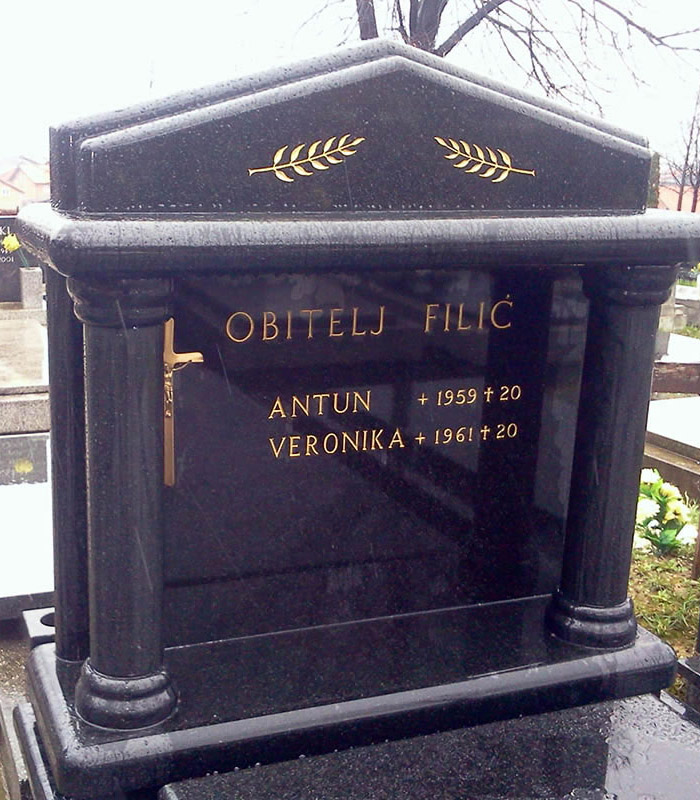
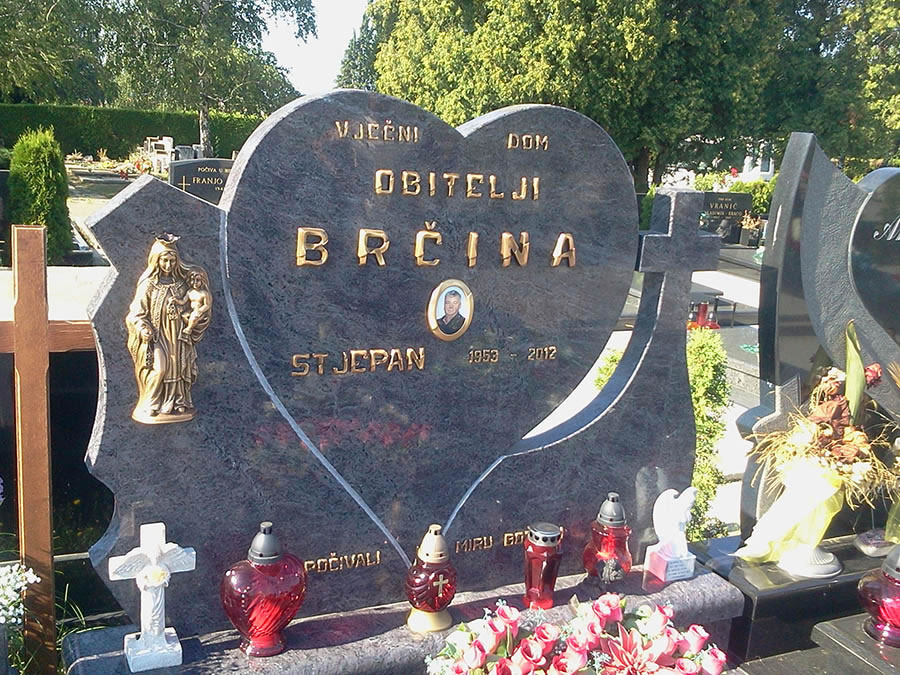
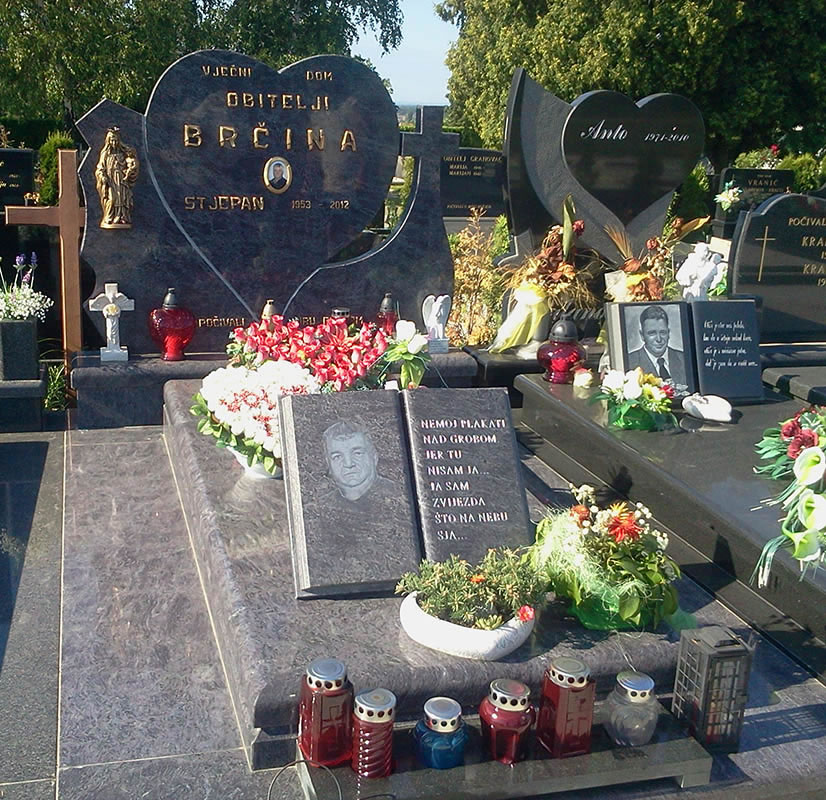
The inscription plate is the most important and indispensable element of any grave device. It serves the basic purpose of every monument, which is to preserve the memory of your deceased family members.

Although a lot of attention has been paid to the design of the inscription plate recently and we can offer you a huge range of shapes in this segment, we believe that the best option is for the inscription plate to be simple and monumental and that its design does not distract attention from the most important thing, which is the inscriptions with which we remember our deceased.

Inscription plates are most often made of one massive block of stone 6, 8 or more cm thick, but there are also designs in which the tombstone is constructed of several pieces of stone.

The inscription plate is usually placed on a stone base, which raises the inscription plate above the level of the cover plates.

Inscription

We prefer to make inscriptions using the machine-carved stone technique, which produces a deep and plastic three-dimensional inscription that will last as long as the entire inscription plate. We can also offer you the creation of inscriptions using the sandblasting technique, as well as the installation of metal letters of various shapes and colors.

Traditionally, in addition to the inscription, which usually mentions basic information about the deceased (surname, first name, year of birth and year of death), religious or other secular symbols are also engraved on the inscription plate.

Depending on the material from which the monument is made, the carved or sandblasted text can be gilded with real gold, silvered with real silver, or painted.

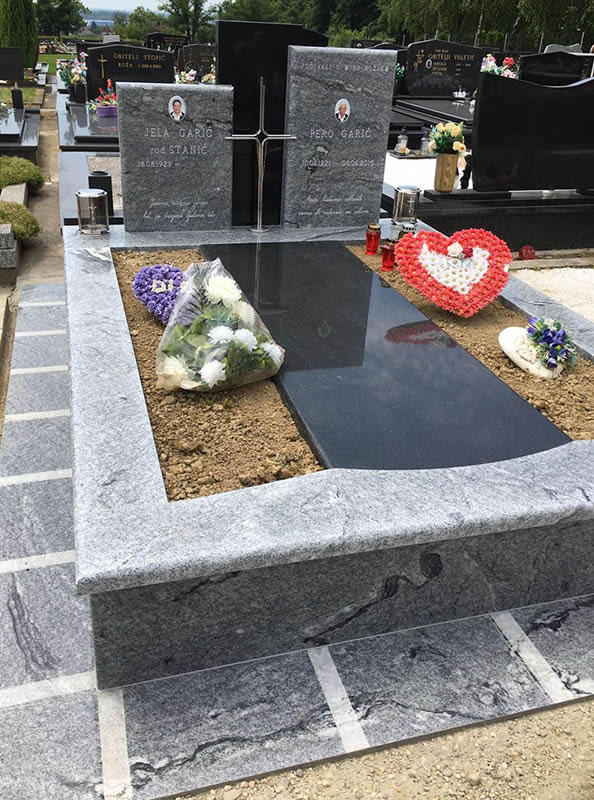
Photos and portraits

Product added to compare.