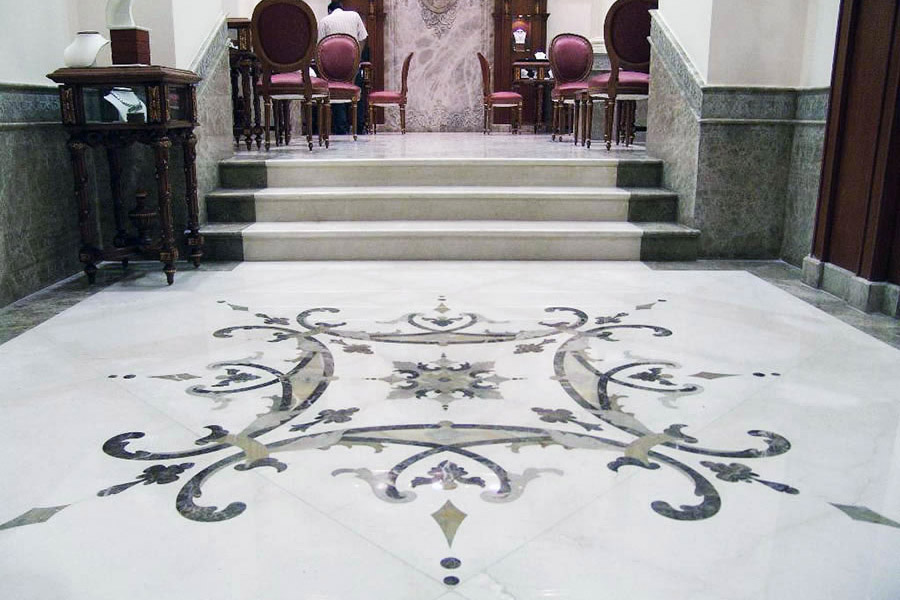
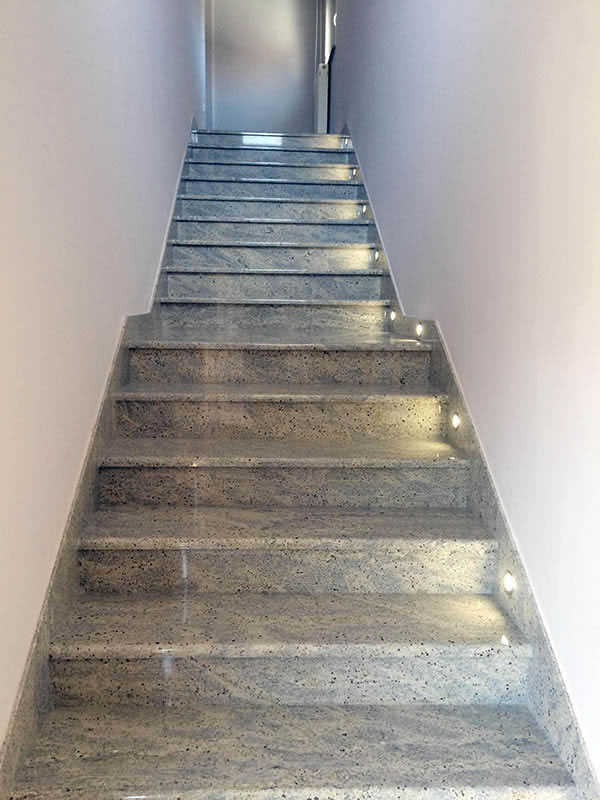
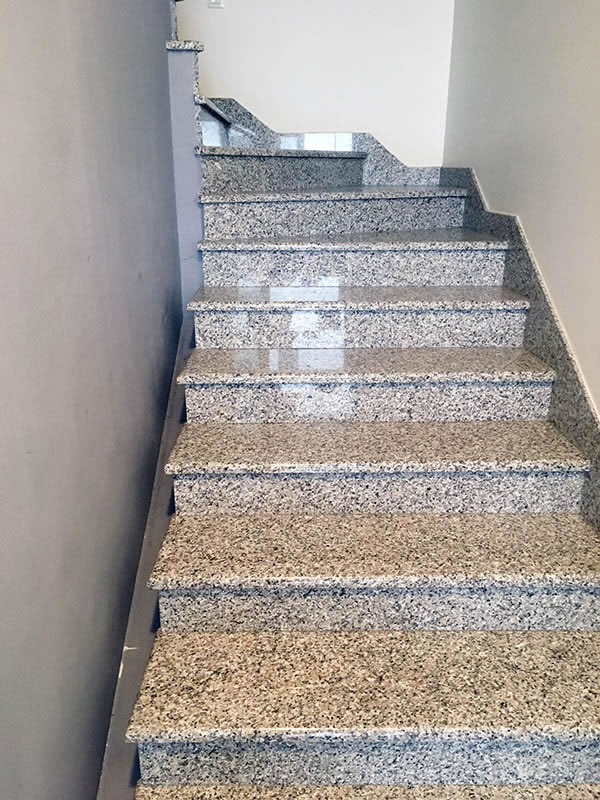
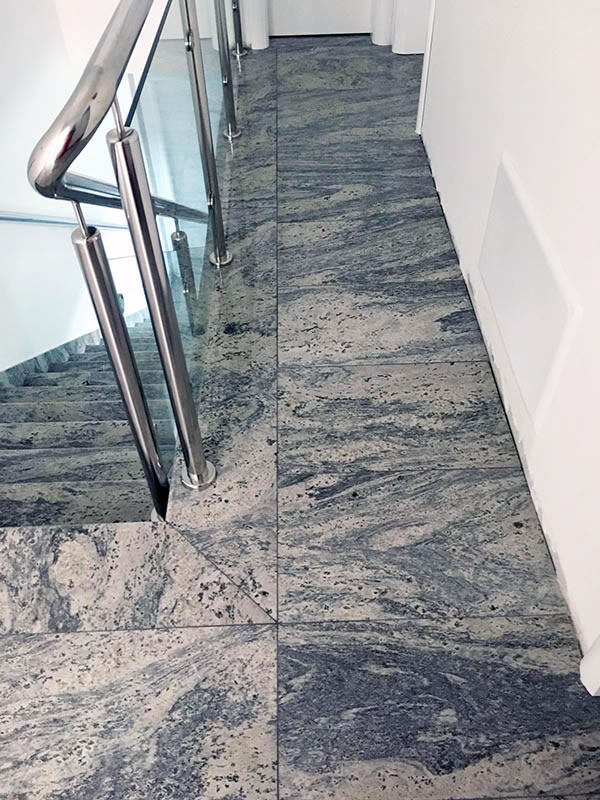
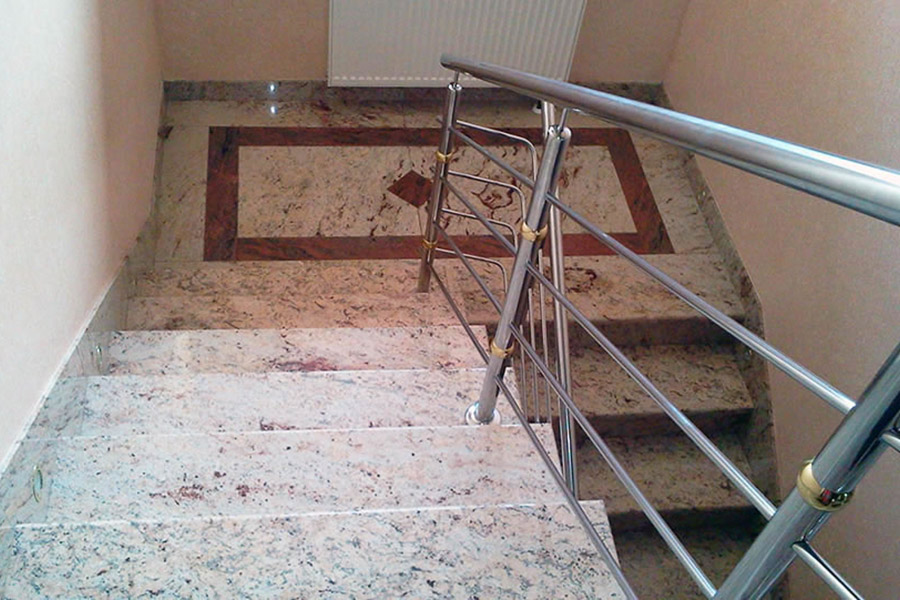
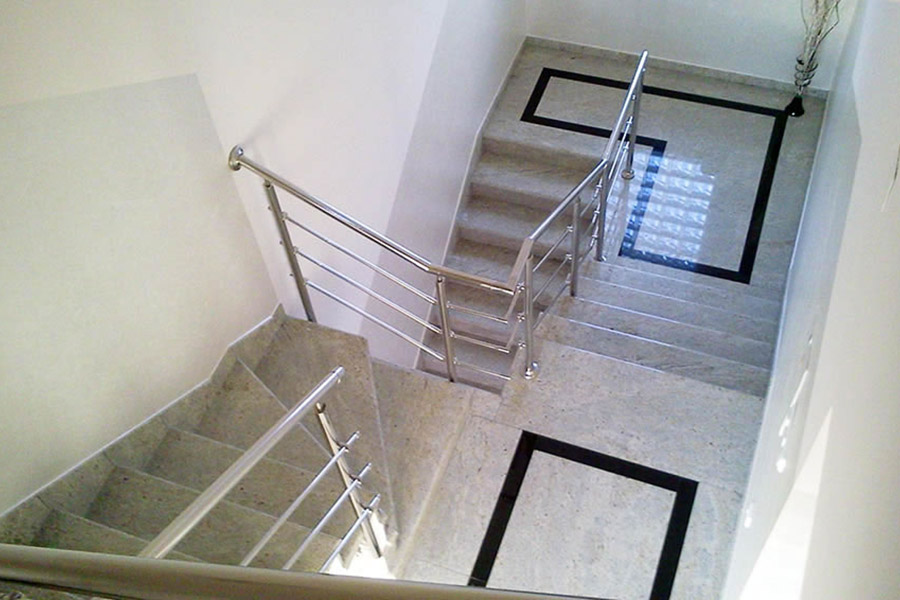
Natural stone is the highest quality material for making staircase elements!

  • Each staircase is unique, so for the production of staircase cladding, it is necessary to choose a quality material with which to create elements that will make your staircase in the interior or exterior beautiful, high-quality and durable
  • by choosing any of the more than 100 types of natural stone that you can order, and whose natural beauty can hardly be replaced by other materials
  • the walking surfaces of staircases are exposed to significant wear and tear, and granites are materials that are extremely resistant to wear. Marbles are softer and therefore more suitable for use on staircases that are not so heavily loaded - internal staircases in households

Basic elements of stone staircase cladding

TREDS

Treads are the most important element of every staircase, considering that it is the tread surface that is most exposed to wear and tear, and is also most exposed to bending depending on the bending of the substructure. The most common tread thickness is 3 cm, but depending on various conditions, they can be made from 2 cm (in the case of narrow stairs with a rigid base where there is no bending). When treads are laid on metal substructures where bending of the base is significantly more pronounced, it is necessary to choose a stone with high bending strength for the treads, it is necessary to choose a thicker stone, and often it is necessary to strengthen the treads by installing reinforcing strips.

Depending on the floor plan projection of the stairs, treads can be regular or irregular. Correct treads are easily defined geometrically, and a list of measurements or a simple sketch is sufficient for ordering. Irregular treads are impossible or too complex to describe geometrically, so in that case, in order to create a tread, it is necessary to create a template.

FRONTS

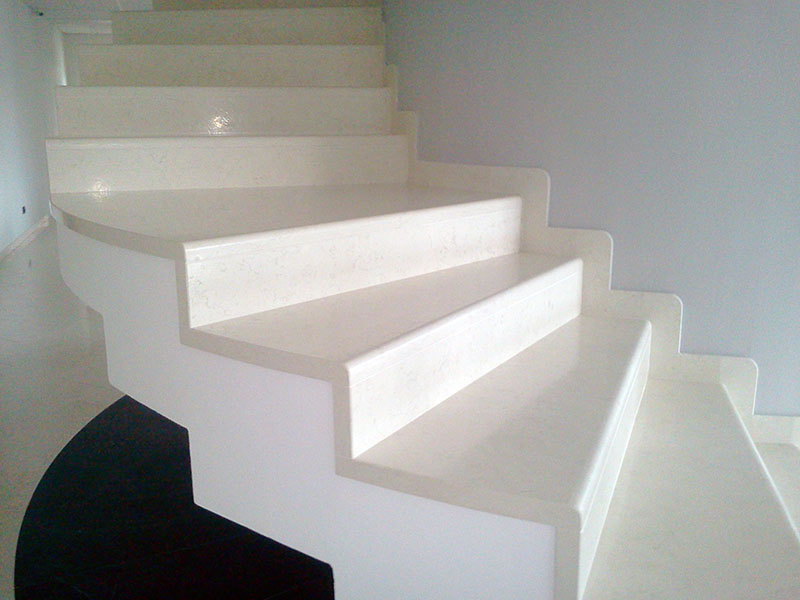
Fronts are vertical surfaces that cover the front part of the stairs. Given that it is exposed to significantly lower stresses, the front is often made of thinner stone slabs, and it is possible that materials are used that do not meet the requirements for treads, but due to their aesthetic properties can fit into the look of the staircase.
LANDING

The landing is the floor surface that connects the two legs of the staircase. It is most often made in the same thickness as the tread, but a smaller thickness can be used if you want to reduce the cost of the project.

SOKL

A plinth is a thin stone wall covering that protects the wall from dirt, moisture and other damage. It is most often made in a thickness of 1 cm, but other thicknesses are also applicable.

A plinth can be made in the following ways:

  • stepped plinth - low
  • stepped plinth - high
  • sloped plinth
  • sloped plinth - cardinal's cap

Choosing stone for staircase elements

The choice of stone is most influenced by the traffic density on the staircase, the desired degree of decorativeness, and the requirements for anti-slip properties.

Generally, for external staircases, we recommend granite with a burnished surface finish, for internal staircases with a high traffic density we recommend polished granite, while for internal staircases with a low traffic density, some types of marble can also be used.

Product added to compare.